
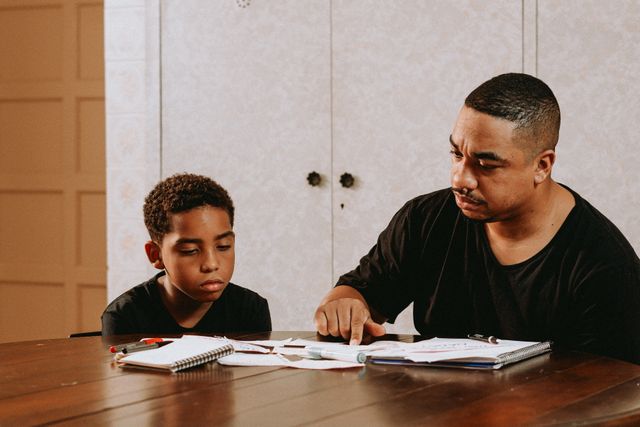
Your child studies for hours, completes homework successfully, and seems to understand what they’re learning in class.
But when the test comes back, the grade doesn’t reflect what you know they’re capable of doing.
Maybe they leave questions unanswered. Perhaps they forget information they knew the night before. Or they become so overwhelmed during tests that they struggle to think clearly.
For parents, this can be confusing and frustrating.
You might wonder whether your child needs to study harder, pay closer attention, or become more confident.
However, difficulty performing on tests doesn’t always mean a child hasn’t learned the material.
Sometimes, test performance is affected by attention, working memory, processing speed, anxiety, or specific academic skill difficulties.
Understanding what may be contributing to the problem can help parents and educators identify more effective ways to support a child’s learning.
Why Can a Child Know the Material but Perform Poorly on Tests?
Classroom learning and test-taking involve overlapping but different demands.
During homework, children may have access to notes, additional time, reminders, or assistance from parents.
During a test, they may need to retrieve information independently, work within time limits, interpret unfamiliar questions, and manage the pressure of being evaluated.
For some children, these additional demands create challenges that aren’t as noticeable during everyday assignments.
For example, a student may understand a mathematical concept but struggle to complete several problems quickly.
Another child may explain a science lesson accurately during conversation but have difficulty organizing written answers.
These differences can provide important clues about how a child processes, retrieves, and communicates information.
6 Reasons Children May Struggle With Test Performance
1. Test anxiety
Some children experience significant worry before or during tests.
They may fear making mistakes, disappointing adults, or receiving a poor grade.
Physical symptoms such as stomach discomfort, headaches, muscle tension, or a racing heartbeat may accompany this anxiety.
When worry becomes intense, it can interfere with concentration and information retrieval.
However, not every child who performs poorly on tests has test anxiety. It’s important to consider other explanations rather than assuming anxiety is the cause.
2. Processing speed difficulties
Processing speed refers to how efficiently a person can complete certain relatively simple cognitive tasks under specific conditions.
A child with slower processing speed may understand the material but need additional time to read instructions, make decisions, or produce responses.
Timed tests can be especially challenging.
For example, a child may answer questions accurately when given sufficient time but leave several questions incomplete during a timed assessment.
Processing speed weaknesses are not the same as low intelligence, and a single processing speed score does not explain every difficulty with timed work.
3. Working memory challenges
Working memory helps individuals hold and manipulate information for short periods.
During a math test, a child may need to remember several steps while completing a problem.
During reading comprehension questions, they may need to recall information from a passage while considering possible answers.
When working memory is an area of weakness, children may lose track of steps, forget instructions, or have difficulty managing multiple pieces of information simultaneously.
4. Attention and executive functioning difficulties
Tests often require sustained attention, planning, time management, and careful monitoring of responses.
Children experiencing attention difficulties may overlook important words, skip questions, rush through assignments, or lose focus during longer assessments.
Executive functioning difficulties may also affect how students organize written responses or decide how much time to spend on each question.
These concerns can occur with ADHD, but attention difficulties alone do not establish an ADHD diagnosis.
5. Learning difficulties
A child may understand a lesson when it is explained verbally but struggle when information must be read, written, or calculated independently.
For example, a student with reading difficulties may understand a science concept but misinterpret written test questions.
A child with written expression difficulties may know the answer but struggle to communicate it effectively in writing.
Specific learning disorders can affect reading, written expression, or mathematics, and the pattern varies from one child to another.
6. Gaps between studying and test demands
Sometimes, the difficulty involves study methods rather than an underlying psychological or learning condition.
Rereading notes may create a sense of familiarity without ensuring that information can be recalled independently.
Children may benefit from practicing retrieval, explaining concepts in their own words, completing sample questions, and reviewing material over several days.
Sleep, fatigue, classroom conditions, and the difficulty of the test itself can also influence performance.
How Can Parents Tell Whether It’s Anxiety or a Learning Difficulty?
There isn’t always a clear distinction based on behavior alone.
A child who becomes upset before a test may be experiencing anxiety. However, that anxiety may have developed after repeated academic struggles.
Similarly, a child who leaves questions unanswered might be distracted, working slowly, having difficulty understanding the questions, or experiencing significant worry.
Parents can begin by looking for patterns.
Does your child struggle primarily with timed tests?
Do they perform better when answering questions verbally?
Are difficulties limited to one academic subject?
Do they become distressed before tests, or do they appear calm but consistently run out of time?
These observations can help identify which areas deserve further attention.
It’s also possible for anxiety and learning difficulties to occur together.
What Does a Psychoeducational Evaluation Examine?
A comprehensive psychoeducational evaluation can help clarify why a child’s test performance differs from their apparent understanding of classroom material.
Depending on the referral concerns, an evaluation may include assessment of:
- Intellectual and cognitive abilities
- Academic achievement in reading, writing, and mathematics
- Working memory and processing speed
- Attention and executive functioning
- Emotional or behavioral factors that may affect learning
- Relevant developmental, educational, and medical history
The psychologist may also review report cards, teacher observations, previous assessments, and available intervention data.
No single test can independently determine the cause of poor test performance.
Instead, findings are interpreted together to identify patterns of strengths and weaknesses and determine whether a diagnosis is appropriate.
Parents may also find our previous article, My Child Can Read the Words but Doesn’t Understand the Story: What Parents Should Know, helpful when test difficulties involve reading comprehension.
Can School Accommodations Help?
Depending on a student’s needs and eligibility, accommodations may help reduce barriers that interfere with demonstrating knowledge.
Examples might include extended time, reduced-distraction testing environments, breaks, written directions, or other individualized supports.
However, accommodations should be based on documented functional needs rather than test scores alone.
Extended time, for example, is not automatically appropriate for every child with anxiety, ADHD, or slower processing speed.
Students may qualify for support through Section 504 or an Individualized Education Program (IEP), depending on applicable criteria.
A private psychological evaluation can provide valuable information, but school-based eligibility decisions are made through the school’s established processes.
5 Ways Parents Can Support Their Child Before the Next Test
1. Ask how your child studies. Encourage active learning strategies such as practice questions, flashcards, and explaining concepts aloud instead of relying only on rereading.
2. Review patterns rather than individual grades. One disappointing test score may reflect many temporary factors. Repeated difficulties across tests provide more useful information.
3. Communicate with teachers. Ask whether your child completes classroom assignments independently, struggles with time limits, or demonstrates stronger understanding during discussions.
4. Reduce unnecessary pressure. Emphasize effort, preparation, and learning rather than treating one test grade as a measure of intelligence or personal worth.
5. Consider professional assessment when concerns persist. If difficulties continue despite appropriate instruction and support, a psychoeducational evaluation may help clarify what is happening.
When Should Parents Consider an Evaluation?
An evaluation may be appropriate when a child consistently performs below expectations on tests despite understanding classroom material and receiving appropriate instruction.
Other reasons to seek guidance may include significant differences between homework and test performance, ongoing academic frustration, difficulty completing timed work, or concerns involving attention, learning, or emotional functioning.
The purpose of an evaluation is not simply to explain a disappointing grade.
It is to better understand how the child learns and identify support that may improve functioning.
Helping Children Show What They Know
A child’s test score represents performance under a particular set of conditions.
It doesn’t always capture the full extent of their knowledge, effort, or abilities.
When test performance repeatedly falls short of expectations, understanding the reasons can be more helpful than simply asking a child to work harder.
At Hammond Psychology & Associates, we provide comprehensive psychological and psychoeducational evaluations for children and adolescents in Brandon, Plant City, and the greater Tampa Bay area.
If your child consistently struggles with tests despite understanding the material, contact our office to discuss whether an evaluation may be appropriate.
Visit hammondpsychology.com or call (813) 654-0503.
This article is intended for educational purposes and does not replace an individualized psychological, medical, or educational evaluation.